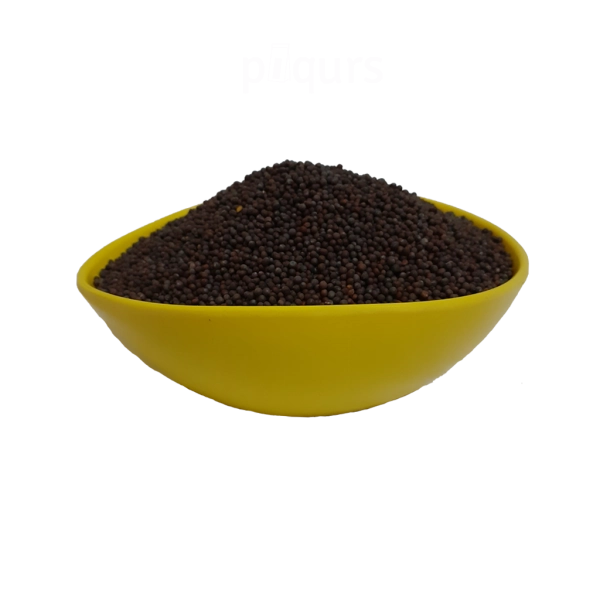
Katuku (black mustard seeds)
- Tamil katuku / kadugu (கடுகு)
- Kannada sasive (ಸಾಸಿವೆ)
- Malayalam kaduku (കടുക്)
- Telugu aavalu (ఆవాలు)
- Hindi rai / sarson
- English black mustard seed
Katuku (கடுகு) is Tamil for mustard seed – here, the small black seeds of Brassica nigra. If you searched for katuku in English, the answer is black mustard seed (the Tamil word is also written kadugu). In South Indian cooking the seed is rarely a background spice: it is the first thing that goes into hot oil.
Where ours comes from
Our black mustard is grown in the Nilgiris and cleaned before packing. The seeds are small and round, dark brown to black, with a heat that only appears when they are crushed or popped in oil.
How it is used in South Indian cooking
- Tempering (tadka) – the defining use. Mustard seeds go into hot oil first, and everything else follows once they crackle: urad dal, curry leaves, dried chillies, asafoetida.
- In coconut chutney and in sambar – the tempering poured over at the end.
- In pickles and in vatha kuzhambu – ground or added whole for pungency.
- In avial and in thoran – a Kerala and Tamil Nadu tempering with coconut oil and curry leaves.
- As mustard oil – pressed from the seeds, used in pickles and in some South Indian fish preparations.
Storing it
Whole mustard seeds keep their pungency for two years or more in an airtight jar. Once ground, they lose it within months – which is why South Indian kitchens keep the seeds whole and crush them at the pan.
Buying and cooking
See pack sizes and prices, and the recipe for Coconut chutney with mustard tempering.


